

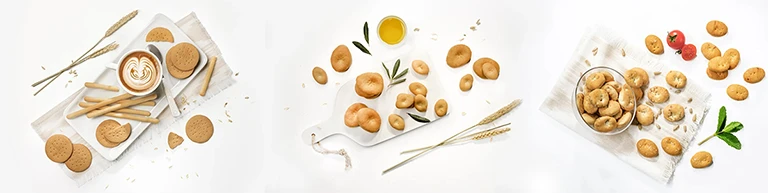
Nutritional engagement
Guaranteeing the nutritional quality of our products is one of our main concerns when manufacturing our crackers. On this section we will keep you updated about all the nutritional aspects and our products.

Natural Ingredients
Quelis provide high nutritional value since they are made with natural ingredients: wheat flour, high oleic sunflower oil, yeast, olive oil, sea salt.
In every Guide, cereals and derivatives are the food group of which it is recommended to eat more daily servings. It can be seen that on average 1 serving/day is considered to be cereals and 2 servings/day are cookies, or dairy products with similar composition.
Mediterranean diet
Quely products are the ideal complement to the Mediterranean diet. They present an excellent balance between the contribution of macronutrients (Proteins, lipids and carbohydrates), in addition to their energy contribution being easily modulated (about 44Kcal per Quelis unit), which means that you can manage the amount taken at any given time. , so they are ideal in small snacks, alone and combined with foods: milk, yogurt, fresh cheeses, fruits, juices, jams or chocolate.
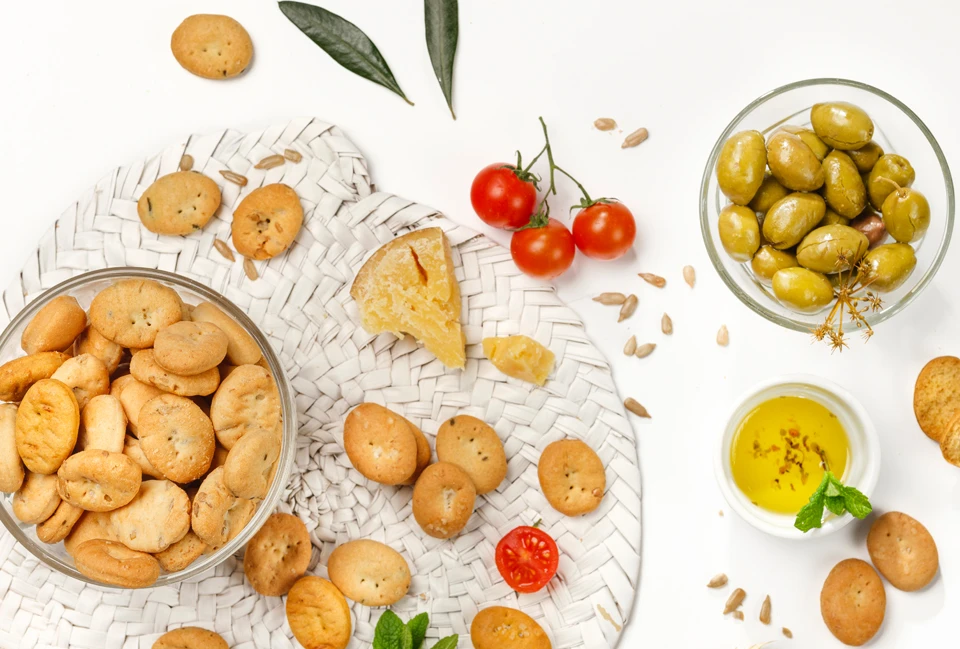

Energetic value
Consuming cookies in moderation is the perfect complement to our diet, thanks to their energy contributionA balanced or healthy diet must be varied, pleasant and sufficient. Carbohydrates, which are energy nutrients, must represent 60% of the total calories in our diet and among the sources of these are cookies.
Hydrates
Around 30 grams of crackers provide 9% of the daily recommended value of carbohydrates, 6% of fats, 3% of proteins and 7% of kilocalories. Crackers provide a high energetic intake, this energy derives mostly from glucids (70%). We could consider that crackers could perfectly cover the energetic values required for breakfast or an afternoon snack, making them an ideal product for children or teenagers. Glucids are also ideal for modulating the equilibrium of our metabolism, regulating the mechanisms of food ingestión, providing a sense of satiety as well as playing an important role in the learning process and memory functions.nal aspects and our products.
Fibre
It is very important to consume the adequate quantity of fibre. The World Health Organisation establishes that the minimum daily consumption should be around 25 grams per person. Those foods which are rich in fibre have a series of properties which are necessary for the correct functioning of our organism: optimizing hydration, regulating our intestinal transit and burning fats excess.